
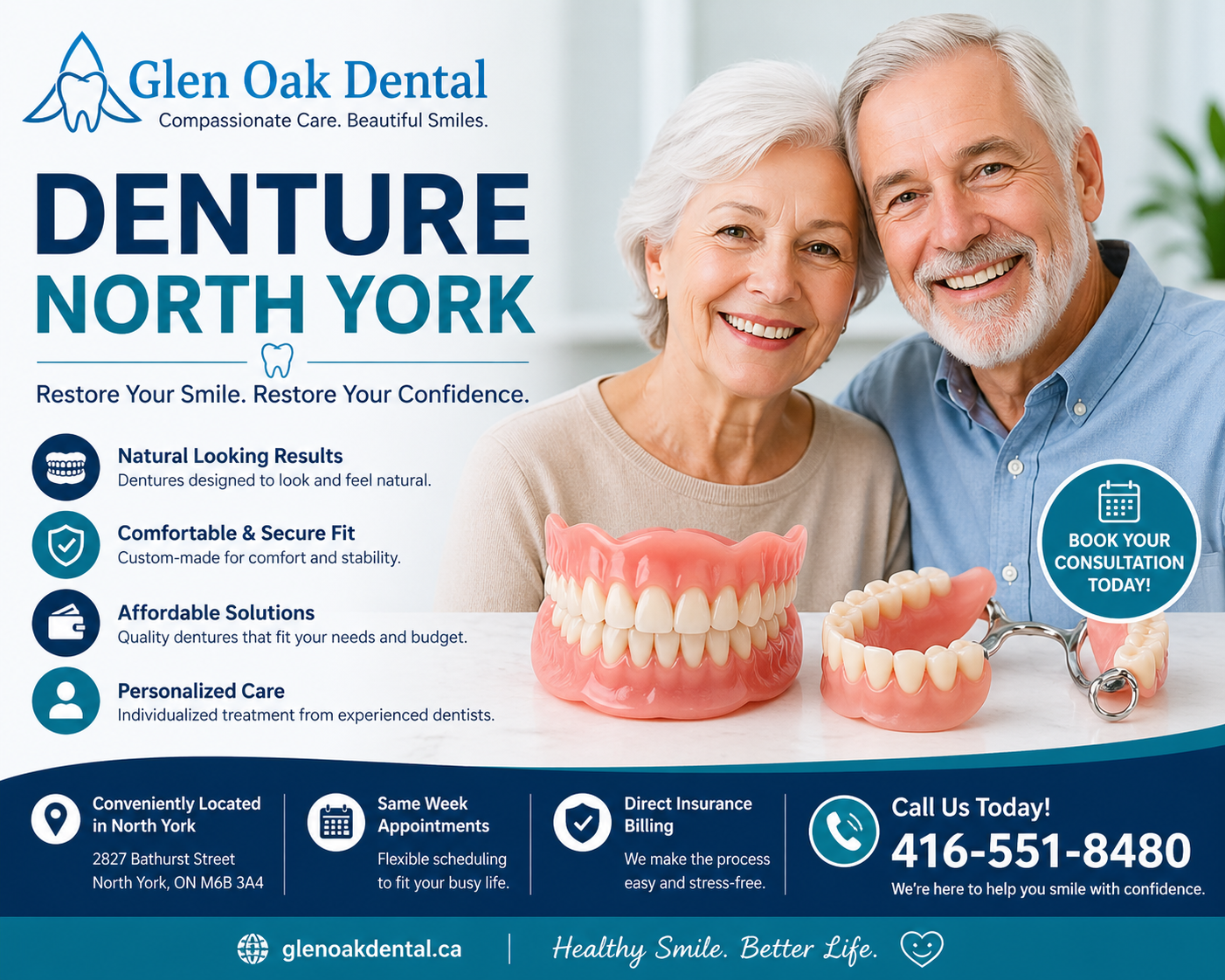
If missing teeth are affecting how you eat, speak, or smile, you are likely exploring tooth replacement options. Navigating the world of restorative dentistry can feel overwhelming, especially with so many solutions available today. Fortunately, modern dental advancements have transformed traditional prosthetics into comfortable, lifelike, and highly durable appliances.
Finding an experienced denturist who prioritizes precise, personalized fittings is essential to achieving a healthy, natural-looking smile. At North York Denture Clinic, we blend advanced clinical techniques with compassionate care to deliver prosthetic solutions designed to fit your unique lifestyle and facial anatomy.
Complete vs. Partial Dentures: Which Is Right for You?
The ideal dental prosthetic depends on your remaining natural teeth, the condition of your jawbone, and your personal goals.
Complete Dentures
Commonly referred to as full dentures, these replace an entire arch of missing teeth on either your upper or lower jaw, or both. They sit snugly over your gums and are held in place by natural suction or a thin layer of dental adhesive. Made from premium acrylic resins, modern full arches are meticulously designed to mimic natural gum tissues and tooth shades.
Partial Dentures
When you still have healthy natural teeth remaining, a partial prosthetic is the ideal solution to fill the gaps. These appliances consist of replacement teeth attached to a pink or gum-colored base. They are anchored securely in place using subtle, medical-grade metal clasps or precision attachments that clip onto your surviving teeth, preventing your remaining teeth from shifting out of alignment.
Elevating Stability: Implant-Supported Dentures
For individuals looking for an alternative to traditional removable prosthetics, implant-supported dentures—often called permanent or anchored dentures—provide unmatched stability.
Traditional options rest directly on the gum tissue, which can sometimes result in shifting, slipping, or minor irritation while chewing hard foods. Implant-retained options solve this issue by snapping directly onto titanium implant posts that are surgically placed into the jawbone.
This secure connection offers several major life upgrades:
Zero Slippage: Eat, talk, and laugh without worrying about your prosthetic moving.
Bone Preservation: The titanium posts act as natural tooth roots, stimulating the jawbone to prevent the bone loss and facial collapse that naturally occurs after tooth loss.
No Messy Adhesives: Eliminates the need for daily glues or creams.
What to Expect: The Creation and Fitting Process
Getting custom-crafted teeth requires a series of precise clinical steps to ensure optimal comfort, proper bite alignment, and a beautiful cosmetic appearance.
1.Comprehensive Consultation:Initial Visit.
Your mouth, gums, and existing bone structure are fully evaluated. Your denturist will discuss your health history, aesthetic preferences, and budget to formulate a personalized treatment path.
2.Precision Impressions:Anatomical Mapping.
Highly accurate physical or digital molds are taken of your oral tissues. These impressions act as the exact structural blueprint for your custom appliance.
3.The Wax Try-In:Aesthetic Preview.
Before fabricating the final piece, a temporary trial version set in wax is created. You will try this on in front of a mirror to check the shape, color, shade, and overall fit, allowing for real-time adjustments.
4.Final Delivery & Tuning:Insertion Day.
Your finalized, premium prosthetic is carefully placed. The denturist checks your bite balance and pressure points, making precise initial adjustments to guarantee immediate comfort.
Maintaining Your Oral Health and Investment
Proper daily care preserves the life of your prosthetics and keeps your mouth free from harmful bacteria.
Always clean your appliance daily using a soft-bristled brush and specialized, non-abrasive denture paste; standard toothpastes contain abrasive particles that can leave microscopic scratches on acrylic, creating breeding grounds for bacteria.
Additionally, always remove your prosthetics before going to sleep. This gives your delicate gum tissues a chance to breathe, recover from daytime resting pressure, and maintain optimal blood circulation. While out of your mouth, store them in a clean container filled with water or a mild soaking solution so the materials do not dry out or warp.
Frequently Asked Questions (FAQs)
What is the average lifespan of custom dentures?
On average, high-quality dentures last between 5 to 7 years. Over time, your jawbone naturally undergoes a process called resorption (shrinking due to missing tooth roots). As your bone structure changes, the prosthetic will gradually lose its tight fit. Regular evaluations at North York Denture Clinic allow us to determine if your appliance needs to be adjusted, relined, or fully replaced to protect your comfort.
What is a denture reline, and how often do I need one?
A denture reline is a routine maintenance procedure where a denturist adds fresh material to the underside of the appliance's base to match the altered contours of your changing gums. Most patients require a professional reline every 1 to 2 years to eliminate slipping, prevent sore spots, and restore a snug, confident fit.
Can I get dentures immediately after having teeth extracted?
Yes. These are known as immediate dentures. They are prepared in advance and inserted into your mouth the exact same day your teeth are extracted, ensuring you never have to go out in public with missing teeth. Because your gums will contract significantly during the natural healing process, immediate options require temporary liners and a permanent reline a few months down the road.
Why do my new dentures feel strange when I speak or chew?
It is completely normal for new appliances to feel foreign, bulky, or slightly loose for the first few weeks as your tongue, cheeks, and facial muscles adapt to holding them in place. Minor speech changes or increased saliva production are temporary. Practicing reading aloud and starting with a diet of soft foods cut into small pieces will greatly accelerate your transition period.